
My Shadow and Me
Learning to befriend the parts you've left behind

Like the wallpaper sticks to the wall
Like the seashore clings to the sea
Like you’ll never get rid of your shadow
Frank, you’ll never get rid of me
Let all the others fight and fuss
Whatever happens, we’ve got us…
Sammy Davis Jr. and Frank Sinatra, those two Rat Pack icons, sang “Me and My Shadow” about their inseparable crooning and club-hopping friendship. To my knowledge, their reference to the shadow had no association with how the great Carl Jung spoke of it.
I only bring it up because, as for me and my shadow… we seem to be moving closer to a Sammy and Frank sort of friendship.
So, what did Carl Jung mean by shadow?
Jung spoke of two distinct parts of the human psyche. On one side, you have the ego. That’s the part that gets shit done and is proud to show off while doing it. Then there’s the shadow, which we often associate with Darth Vader or Gollum-like characters, but that certainly isn’t the whole story. The shadow consists of all the parts of ourselves we have learned are unacceptable—both negative traits and hidden gifts. Whatever we cannot consciously own gets pushed into the darkness of the unconscious.

The book of Genesis lays out these ego/shadow dualities of the personality through familiar yet brilliant allegorical epics. There’s some wildly illuminating psychology in those Sunday School tales; we’ve just been too distracted by whether there was literally a talking snake, or whether they had sex with their sisters, and how the hell Noah corralled both wombats and velociraptors onto the ark.
So, I invite you to join me for a fresh revisit of a few of those stories through a Jungian lens.
Before we jump into Jungian interpretations, I’d like to begin with a unique rabbinical interpretation of the Genesis account of the two Adams.
In his 1965 essay, The Lonely Man of Faith, which became a classic book within Hebrew academia, Rabbi Joseph B. Soloveitchik argues that within the human person, there live two sacred energies.1
Soloveitchik was not writing as a Jungian psychologist. But his distinction between Adam 1 and Adam 2 provides a remarkably fruitful foundation for thinking about Jung’s ideas of ego, shadow, and the divided self.
Through the lens of Soloveitchik’s Lonely Man of Faith…
Adam 1 from Genesis chapter 1 is the ambitious, creative, productive side of the self. Adam 1 builds civilizations, launches businesses, raises families, and changes the world.
Adam 2 from Genesis chapter two is the relational, contemplative, receptive side of the self. Adam 2 longs for intimacy, meaning, beauty, belonging, and communion with God.
It’s important to note that one Adam energy isn’t necessarily better than the other. The problem begins when we identify with one at the expense of the other.
Depending on our family system, our culture, and church tradition, one of these Adam energies is often celebrated while the other is quietly exiled into the darkness.
A boy like me, raised in a rural middle America culture that prizes toughness and achievement, will typically learn to hide Adam 2’s tenderness, grief, sensitivity, and vulnerability.
Another person raised in a highly spiritual or artistic environment may learn to hide Adam 1’s ambition, anger, strength, or healthy aggression.
Whatever parts of ourselves we cannot consciously own do not disappear. They simply hide away, moving into the dark underground.
This is what Jung called the shadow—those parts of us that have been rejected, denied, or forgotten.
The spiritual journey was never meant to destroy these hidden parts but bring them into the light, name them and integrate them into a larger wholeness.
After we’re introduced to Adam and Eve and the ensuing apple incident, this ego and shadow thing starts to get really interesting.
Adam & Eve have two sons. When we read this symbolically, Cain and Abel are a massively powerful illustration of Jung’s two dimensions of the human soul
These twin boys represent two very different personalities or value systems. Cain’s name means to possess and his personality appears very similar to what Soloveitchik described as Adam 1. Then you have Cain’s brother Abel, whose name means lightness of being and appears to reflect Adam 2.
These two brothers help us frame up a key psychological dynamic within the human soul.
Cain (To possess) on the one side represents: productivity, achievement, control, accomplishment, possession.
Abel (lightness of being) on the other side represents: receptivity, tenderness, surrender, relationality, lightness of being.
These two energies, the yin and yang, the masculine and feminine of the psyche, when integrated, create a consonance or wholeness that make for a healthy human being.
But we all know where this story goes: Cain cannot tolerate Abel. And why is that? Because Abel acts as a mirror that reveals a way of being in the world that Cain has lost access to. Abel embodies qualities that Cain has cast aside and disowned.
And thus, Abel is Cain’s shadow. And what Cain does to his shadow indicates what we all do, usually at an unconscious level… we kill off the parts we don’t know how to integrate.
I kill off Abel when I sacrifice a soft, attentive relational presence for some conditioned ideal of productivity.
I kill off Abel when I project an ideal image of myself, a persona, rather than risking grounded authenticity.
I kill off Abel whenever I prioritize my accomplishments over relational intimacy.
Of course, most of us tend to dance this dance in our pretentious 20’s and ambitious 30’s, but we see plenty of evidence of it continuing to carry on through mid-life and throughout the remaining stubborn decades.
But I’ll bet you’ve encountered at least one person who has allowed their inner Cain and Abel to befriend and embrace each other. You know it by the ease, authenticity, and self-effacing nature of their presence. We don’t forget wisdom like that, and when possible, we seek them out as elders, gurus, and mentors.
If I may, I’d like to pause here and put some of my own skin on all this.
Why do I personally find this so compelling?
After years of cosplaying Midwestern conservative male toughness, followed by a move to Denver for seminary and acquiring an educated competence, then becoming a pastor and non-profit leader dwelling the past 23 years in urban liberalism, I feel like mid-life is gently saying… the gig is up. Here at the tail end of my 40’s, I’m realizing with more clarity than ever that I’m actually a highly sensitive person and always have been. I’m not a natural academic or intellectual, but I will give you my full relational presence. I’ve spent the past decade or so wrestling with and for full acceptance and integration of all those parts that I believe Jung would identify as… my shadows.

I mean, when your entire teenage years were spent in highly conservative southern Indiana, where real men play competitive contact sports (which I loved) and teenage boys spend their summer time stacking 50-pound bales of hay on the back of a flatbed wagon (which I also loved) you go to great lengths not to be perceived as sensitive or soft. God forbid someone might think you’re less than tough or… gay.
So, here I am a few weeks away from birthday number 49 and I suppose you could say I’m coming out of some form of the proverbial closet. Finally, a bit more at ease with declaring myself a highly sensitive relational man. Maybe I can actually allow myself permission for more self-compassion to get a little closer to the truth of me, inching slightly closer to whatever wholeness looks like this side of heaven.
Where I once thought sin was primarily some obvious moral failure. I now see it as a covering up or a detachment from those parts of myself that long to be recognized and given voice.
I’ve always connected more to the way of Adam 2 and always related far more to Abel’s relationality, sensitivity, and lightness. It’s just taken some serious years to settle in and begin to embrace the goodness of my own fullness.
I wonder how you personally relate to this? Has there been a part of you that remained buried or hidden in the shadows? A part that’s just beginning to curiously peek around the corner of consciousness, looking to enter the fullness of your Self?
Where do we go from here?
With the concept of Adam 1 & Adam 2 we see these two sacred forces. We learn that an imbalance between those two energies creates a shadow.
With Cain and Abel, we see that the human response to the shadow is to eliminate and kill it. (Am I my brothers keeper? In other words, “Am I responsible for the parts of myself that I’ve abandoned?”)
What comes next in the book of Genesis, is those tales of Noah, followed by Abraham & Sarah, and the birth of their promised son, Isaac. And Isaac has two twin boys named Jacob and Esau, which brings us right back to another super amplified version of ego and shadow.
With Cain & Abel, we see the tendency to eliminate the shadow.
In Jacob’s relationship to Esau, we see the tendency to project the shadow onto another.
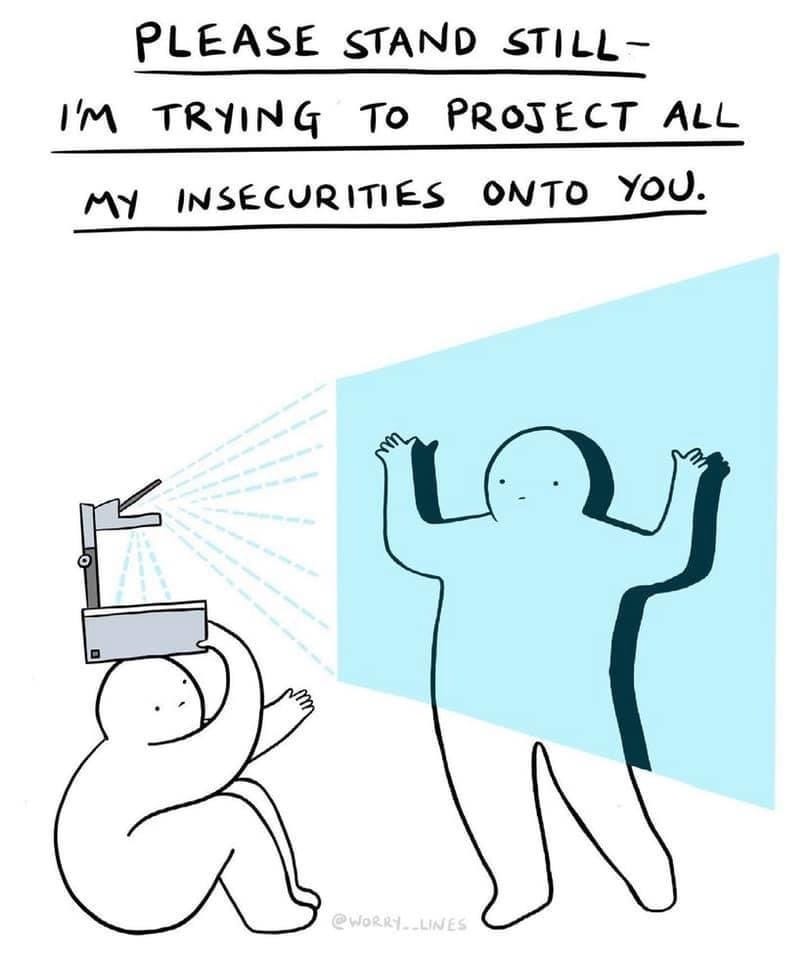
So in the same pattern of Adam 1 and Adam 2 and the same theme of Cain and Abel, Jacob and Esau have these two comically different personalities.
Esau was a daddy’s boy. Jacob a momma’s boy.
Esau had all the stereotypical masculine stuff going for him, like Adam 1, a very culturally sought-after type A personality, a very self-sufficient leader. A rugged, skilled, hairy-chested hunter of a man who was most at home out there in the wilderness with a lower lip full of chewing tobacco as he controls his own destiny.
And man, Jacob wants that life more than anything, but the poor fella just can’t get there. And that desire becomes an obsession so powerful that he turns to the toxic habits of deception and manipulation. He plays all those manipulative tricks on his brother and plays those same games with his elderly, dying father. And as if that’s not cringy enough…
You keep reading and in Gen. 28: 20 – the reader observes Jacob talking to God, and Jacob is playing the smarmy used car salesman to manipulate God. Jacob does all the transactionary bull shit… Here’s what I can do for ya… If you’ll only do this one thing for me… He’s so deeply insecure and entrenched in scarcity, so detached from the larger reality of who he is, that he actually believes he’s capable of pulling one over on the divine source of it all.

Eventually, Jacob does make the turn toward maturity, and that turn is instigated through eating a large ass spoonful of his own medicine. A medicine handed to him by his father-in-law.
The small paragraph version…
Jacob falls in love with Rachel and seeks her hand in marriage. Rachel’s dad requires Jacob to work for 7 years to earn it. He works those 7 years, but Rachel’s father bamboozles Jacob, handing over his other daughter, Leah. Jacob is irked as hell but agrees to work another 7 years, finally marrying Rachel. And through it all, it seems that navigating this deception, getting the trickster games turned on himself, Jacob slowly begins to catch sight of and embrace his own shadows.
There are a couple of Easter egg clues buried in that story…
If we pay attention to the author’s use of the number 7, we’ll know that the number 7 represents completion, healing, and wholeness, and the reality is that healing and wholeness only come our way when we begin to see ourselves accurately as we truly are.
So, this is Jacob’s introduction into the liminal space of knowing he’s not the one in ultimate control, and maybe he never has been. This wasn’t how it was supposed to go. And there seems to be just enough humiliation and a receptivity to the humiliation for his old illusions to dissolve, and a new consciousness to emerge.
Eventually, Jacob will be face-to-face with his brother again. He has spent his entire life wrestling with the ideal of his brother. But that was all an external wrestling, and now comes the private internal (in the nighttime shadows) grappling where the rival is no longer his brother, but the false self he has spent decades constructing. He finally begins to honestly struggle through the essential questions his life has been asking…
Who am I if I stop competing?
Who am I if I stop performing?
Who am I if I stop pretending to be someone else?
We can’t pretend those aren’t terrifying AND essential midlife questions.
And Jacob walks away from this internal wrestling with a limp because genuine transformation always wounds the ego.
We never really grow up without a punch or two in the gut, without losing the illusion of control.
Jacob sees Esau’s face and says, “To see your face is like seeing the face of God.”2
Because the face of God tends to appear when we venture toward our deepest insecurities, wounds, and fears.3
To be clear, here’s one more look at the patterns of the psyche these ancient narratives hold:
In the story with the 2 Adam’s we discover the shadow.
In the story of Adam & Eve, the response to the shadow? Hide it!
In the story of Cain & Abel, the response to the shadow? Kill it!
In the story of Jacob & Esau, the response to the shadow? Project it! Compete with it!
Jacob at Peniel, the response to the shadow? Wrestle with it!
And at the reunion of Jacob & Esau, the response to the shadow? Embrace it.
That’s some Jungian shtuff right there. Joseph Campbell. Alan Watts. Thich Nhat Hanh. Merton, Teresa of Avila, Julian of Norwich, Nouwen… along with so many others. I mean, that’s pretty much a map of the spiritual life.
A life that begins with hiding from our shadow, then fighting it, then projecting it onto others. But eventually, if grace is patient enough, (and it is sufficient after all) we may discover that the shadow was never our enemy. It was a cast-off and abandoned sibling we’ve been waiting for all our lives to come back home.
Like Sammy and Frank, the goal was never to get rid of our shadow, but to learn to walk, sing, and dance together.
Joseph B. Soloveitchik. The Lonely Man Of Faith. Doubleday. 1965
Genesis 33:10
“Find out what a person fears most and that is where he will develop next.” - Carl Jung
Thank you for so wonderfully explaining shadow work! I’ve heard the term before, but never knew exactly what it was. Great stuff!
Great stuff here, Ryan. Using a Jungian lens with scripture reveals so much depth to these 'mythic' narratives, and shows where the sacred stories are meant to work on the human psyche. Thanks for this one!